

0
Kims Aircon was added to your shopping cart


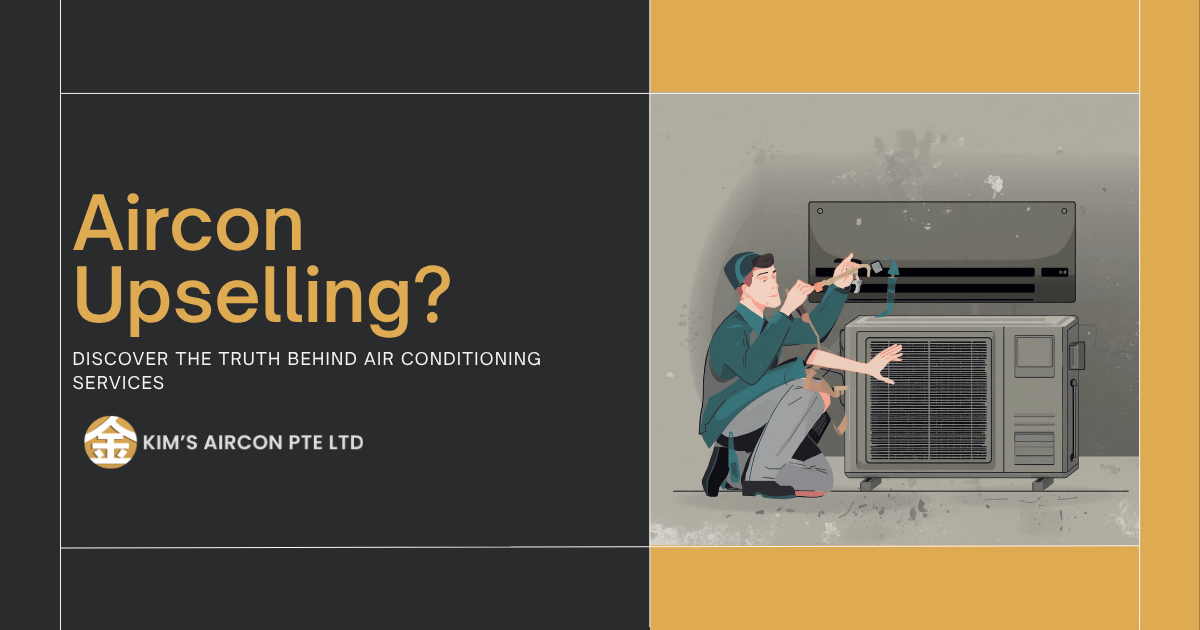
Singapore's aircon trade has an honesty problem, and it's worth saying plainly — even though we're part of that trade. Ask around and you'll hear the same stories: every visit ends with a push for a chemical wash, a gas top-up "just to be safe," or a warning that something's about to fail. Some of it is real. A lot of it isn't. Here's how to tell the difference, from a company that would rather keep you for twenty years than oversell you once.
Most of the time, general servicing is enough. A routine service cleans the filters, coil, blower and drainage of a unit that's still working — and for a reasonably maintained home aircon, that's all it needs, every few months. A chemical overhaul is a heavier job: the unit is dismantled and the parts cleaned in solution. It's the right call for a badly clogged, mouldy, or long-neglected unit — not a default add-on for every visit.
The honest test: if your unit still cools well and you service on schedule, you almost certainly don't need a chemical overhaul yet. If a technician recommends one, ask them to show you the coil first. A genuinely dirty coil is obvious; a clean one doesn't need chemicals. When it really is warranted, our chemical overhaul is there — but we'll tell you when a normal servicing will do instead.
It can, if it's overdone. Chemical cleaners are effective, but done too frequently — or rinsed poorly — the residue can corrode the aluminium fins and coil over time. This is exactly why we don't treat chemical washing as routine maintenance. For regular deeper cleaning, we point most customers to steamwashing instead: high-temperature steam lifts grime and kills mould without chemicals, so it's gentler on the unit and on your indoor air. Save the chemical overhaul for when a unit genuinely needs the heavy treatment — not as a default every few months.
Usually not, and here's the part the trade rarely explains: aircon refrigerant runs in a sealed loop. It isn't consumed like petrol. A correctly working system never "runs low" on gas. If your unit genuinely is low, it's because there's a leak somewhere.
If someone's pushing regular top-ups as routine maintenance, get a second opinion. Our troubleshooting guide explains how to spot a real leak.
A few simple checks put you back in control:
Almost always, no — and it's worth understanding why before assuming the worst. Cooling can dip after a service if the filter or panels weren't reseated properly, or if the unit genuinely needed a deeper clean than a surface service could give. The fix is usually a callback to set it right, which any reputable company does under their workmanship guarantee.
That said, if a unit was fine before, you declined the extras, and it's noticeably worse after — and the company shrugs — that tells you something about who you're dealing with. The answer isn't to assume sabotage; it's to use a company whose work comes with a guarantee and who'll come back without an argument.
Because the margins sit in the add-ons. General servicing is low-margin; chemical washes, gas top-ups and overhauls are where the money is. That's not a conspiracy — it's just the incentive, and it's why aggressively-advertised, high-churn operators lean on upsells to make the numbers work.
An honest operator works the other way: tell the customer the truth, including when they don't need something, and earn the repeat business instead. That's the whole model here. We'd rather you call us for the next ten years than feel fleeced once.
 Add Contact: UEN 202138889N
Amount to Pay$0.00
Add Contact: UEN 202138889N
Amount to Pay$0.00
To ensure your transaction is processed promptly, please send us a screenshot of the payment confirmation after completing the transaction to contact@kimsaircon.com.sg or whatsapp 88171587.
